
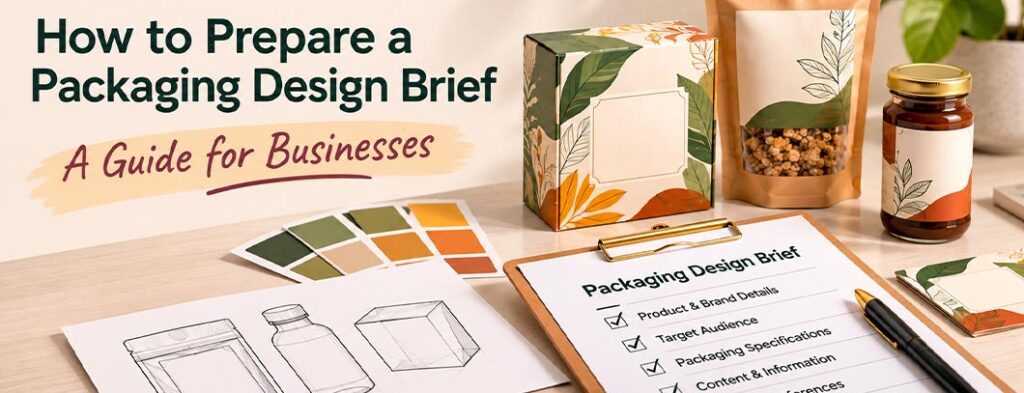
A successful packaging design project starts with a clear understanding of the product, the brand and the intended market. Before approaching a packaging designer, it is important to have the right information ready.
A packaging design brief helps communicate your expectations, product requirements and creative direction. It also helps the designer understand your business and develop packaging that is both visually appealing and practical.
Whether you are launching a new product or refreshing an existing package, here is what you should include in your packaging design brief.
1. Introduce Your Brand and Product
Start with a brief introduction to your business and the product that needs packaging.
Include:
- Your brand name and a short brand introduction.
- Product name and category.
- Key product features and benefits.
- Your brand’s positioning (premium, affordable, natural, organic, etc.).
This information helps the designer understand the personality and market position of your product.
2. Identify Your Target Audience
Who will be buying your product?
Consider the age group, lifestyle, preferences and purchasing habits of your intended customers. Also mention whether your product targets the local market, export markets or both.
Understanding your audience helps determine the appropriate design style, colours, typography and overall packaging presentation.
3. Provide Packaging Specifications
Packaging design is not just about appearance. The design must fit the actual packaging structure and printing requirements.
Provide details such as:
- Packaging type (box, pouch, bottle, jar, label, sleeve, etc.).
- Dimensions and shape.
- Packaging material.
- Printing requirements and available finishes.
- Existing dielines or packaging templates, if available.
If you do not have a dieline, your packaging supplier may be able to provide one based on the selected packaging structure.
4. Share Product Information and Required Content
Prepare all information that must appear on the packaging.
Depending on your product and market requirements, this may include:
- Product name and description.
- Ingredients and nutritional information.
- Net weight or volume.
- Manufacturing and expiry details.
- Barcode and product identification.
- Usage instructions and storage information.
- Manufacturer or distributor details.
- Relevant certifications and regulatory information.
Providing accurate content early helps avoid unnecessary design revisions.
5. Explain Your Design Preferences
Give the designer an idea of how you want your product to look and feel.
You can share:
- Existing brand guidelines and logo files.
- Preferred colours and typography.
- Reference packaging designs you like.
- Competitor packaging examples.
- Designs or styles you want to avoid.
Reference images are useful for communicating your preferences, but the final design should reflect your own brand identity rather than simply copying another product.
6. Define Your Budget and Timeline
Let the designer know your expected project timeline and budget.
Also clarify whether you require:
- One packaging design concept or multiple concepts.
- A single product design or a range of related products.
- Additional sizes or flavour variations.
- Print-ready artwork and production support.
This helps establish a realistic project scope from the beginning.
A Simple Packaging Design Brief Checklist
Before starting your project, make sure you have the following information ready:
- Brand name and introduction
- Product details and key benefits
- Target audience and market
- Packaging type, dimensions and material
- Product information and mandatory content
- Logo and brand guidelines
- Design references and preferences
- Budget and expected timeline
- Printing or production requirements
You do not need to have every technical detail finalised before approaching a designer. A good packaging design partner can guide you through the process and help identify any missing requirements.
Final Thoughts
A well-prepared packaging design brief makes the design process smoother, reduces misunderstandings and helps achieve better results.
At DesignzHub, we work with businesses to develop packaging designs that communicate brand value, attract customers and meet practical production requirements. Whether you are launching a new product or updating existing packaging, having a clear brief is a great place to start.
Looking for professional packaging design services? Get in touch with DesignzHub to discuss your next packaging design project.
Frequently Asked Questions
A packaging design brief is a document that outlines essential information about a product, brand, target audience, packaging requirements and design expectations. It helps the designer understand the project before starting the creative process.
You should provide your brand details, product information, target audience, packaging dimensions, material specifications, required packaging content and design preferences. Existing brand guidelines and reference images are also helpful.
Not necessarily. If you already have a dieline from your packaging supplier, you can share it with the designer. If not, your supplier or designer can help you identify the required packaging structure and template.
Yes. Packaging designs can be developed as a consistent product range, with variations for different flavours, sizes or product types while maintaining the same overall brand identity.
The timeline depends on the complexity of the packaging, number of concepts, product variations and revision requirements. Providing a clear brief and accurate product information can help make the process more efficient.
Related Reading
CMYK vs RGB: Understanding Colour Modes for Print & Digital Design
Why You Should Avoid Borders in Print Design (And What to Do Instead)
Understanding Dielines: The Blueprint for Perfect Packaging Design
Common Packaging Design Mistakes FMCG Brands Make (And How to Avoid Them)
How to Prepare Your Product for Export with Professional Packaging Design